We were contacted by First Responders on a barrier island off the coast of Queensland, who needed a boat with the capacity to function like an ambulance. The vessel needed to be fast, safe and capable of providing emergency medical services. Additionally, it required an electrical system robust enough to handle refrigeration and other essential emergency equipment. The challenge was to design a craft that could meet these specific requirements and operate efficiently in demanding conditions.
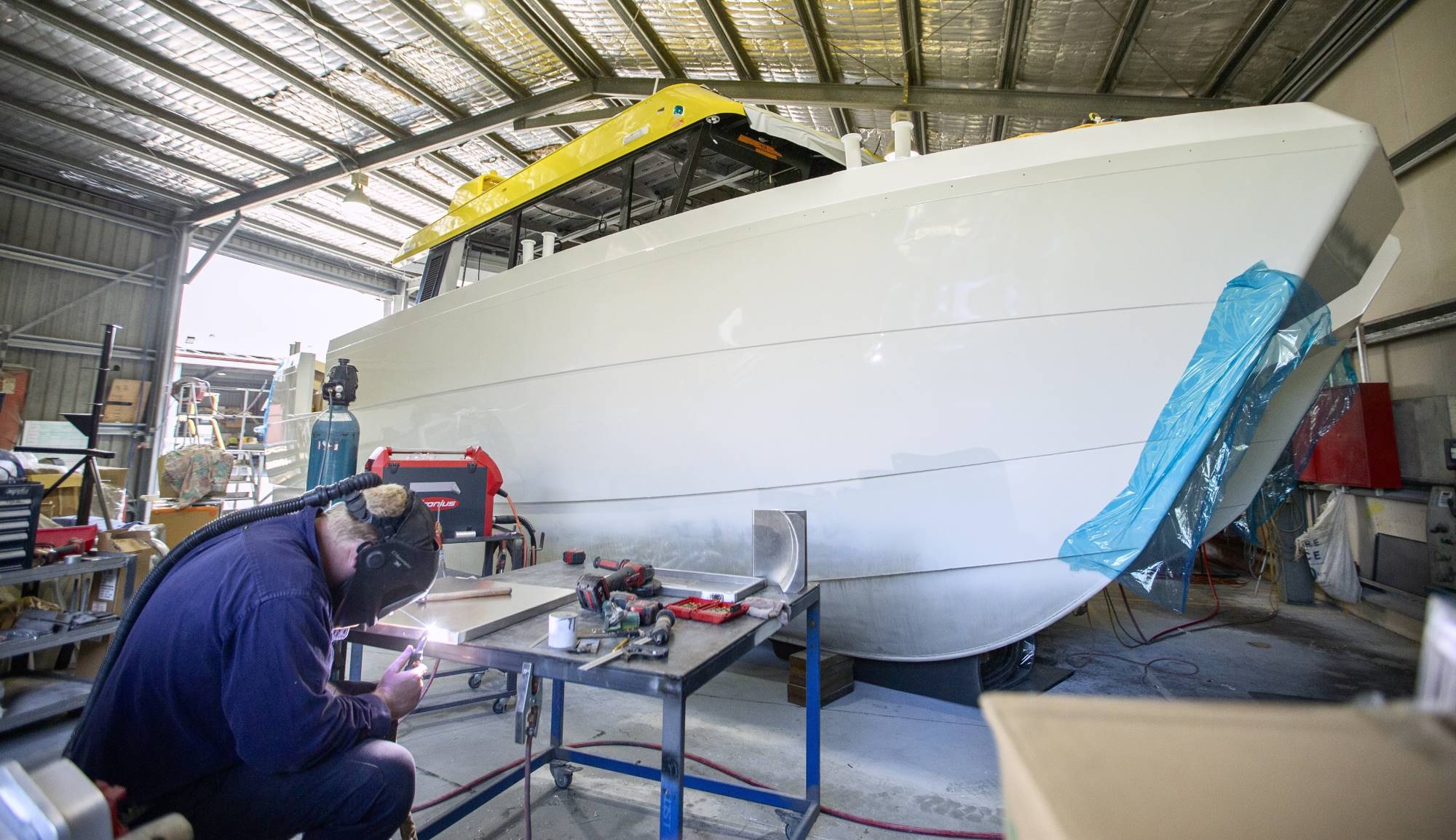
To address the client's needs, we conducted detailed consultations to understand their specific requirements. Using our advanced CAD-CAM and CNC machinery, we designed a solution that we knew could be produced with precision. Our skilled welders then executed the modifications on a commercial vessel, ensuring all components were seamlessly integrated. The design included spaces for medical equipment, a patient bed, secure storage and an electrical system capable of supporting refrigeration and other emergency devices, all while maintaining the vessel's speed and safety.
The project resulted in a highly capable ambulance boat that exceeded the client's expectations. The customised vessel provided a safe and efficient solution for transporting patients and delivering emergency medical care. This successful project underscored our understanding that equipment for first responders must be designed intuitively, supporting collaborative efforts to heal the sick and alleviate suffering.
The vessel was engineered to meet strict safety expectations for patient transport, with stable access, secure storage and careful placement of medical equipment to minimise trip hazards in rough conditions.
The electrical and structural modifications were integrated into the existing hull using tested fabrication methods so the vessel stayed fast and predictable to handle for First Responders.
Yes, this project involved designing around refrigeration, patient monitoring and other emergency equipment by upgrading the electrical system and planning the fit-out in CAD before fabrication.
That approach allows the team to confirm space, power loads and cable routing before work begins, reducing downtime and rework.
Timeframes depend on vessel size, inspection requirements and equipment complexity, but projects of this nature usually run across a defined design period followed by a scheduled fabrication and installation window.
Clear upfront scoping with emergency services helps lock in a program that minimises time off the water while still allowing for testing and adjustments.
The team’s experience with emergency and defence projects means designs are prepared with relevant standards and client sign-off processes in mind. All documentation, from drawings through to weld procedures, can be coordinated to support the client’s internal approval, safety and inspection requirements.